Are you uncertain about whether to incorporate automation or manual methods when building your semiconductor equipment line, due to a lack of clear evaluation criteria? Such vague choices can not only lead to immediate production inefficiencies but also result in hidden quality issues and significant financial losses. Missing the optimal decision could weaken a company's competitiveness and threaten sustainable growth in a rapidly changing market. Huvics understands the importance of making the right decision at such critical junctures.
The Importance of Strategic Choice for Automation vs. Manual Lines
Features of Automation and Manual Systems
Choosing between an automated and manual line in semiconductor equipment evaluation is a strategic decision that significantly impacts a company's production goals, budget, and product quality. Many companies view automation as inherently efficient or manual methods as cost-saving based on simplistic binary thinking. However, each method has its unique strengths and weaknesses, making it crucial to evaluate the most suitable approach based on business characteristics and current conditions. Automation lines are advantageous for consistent quality in large-scale production environments but present challenges with high initial investment costs and limited flexibility in specific processes. In contrast, manual lines offer flexible response to process changes and are suitable for small-scale production, though they come with challenges like the potential for human error and productivity limits.
Huvics' Customized Solutions
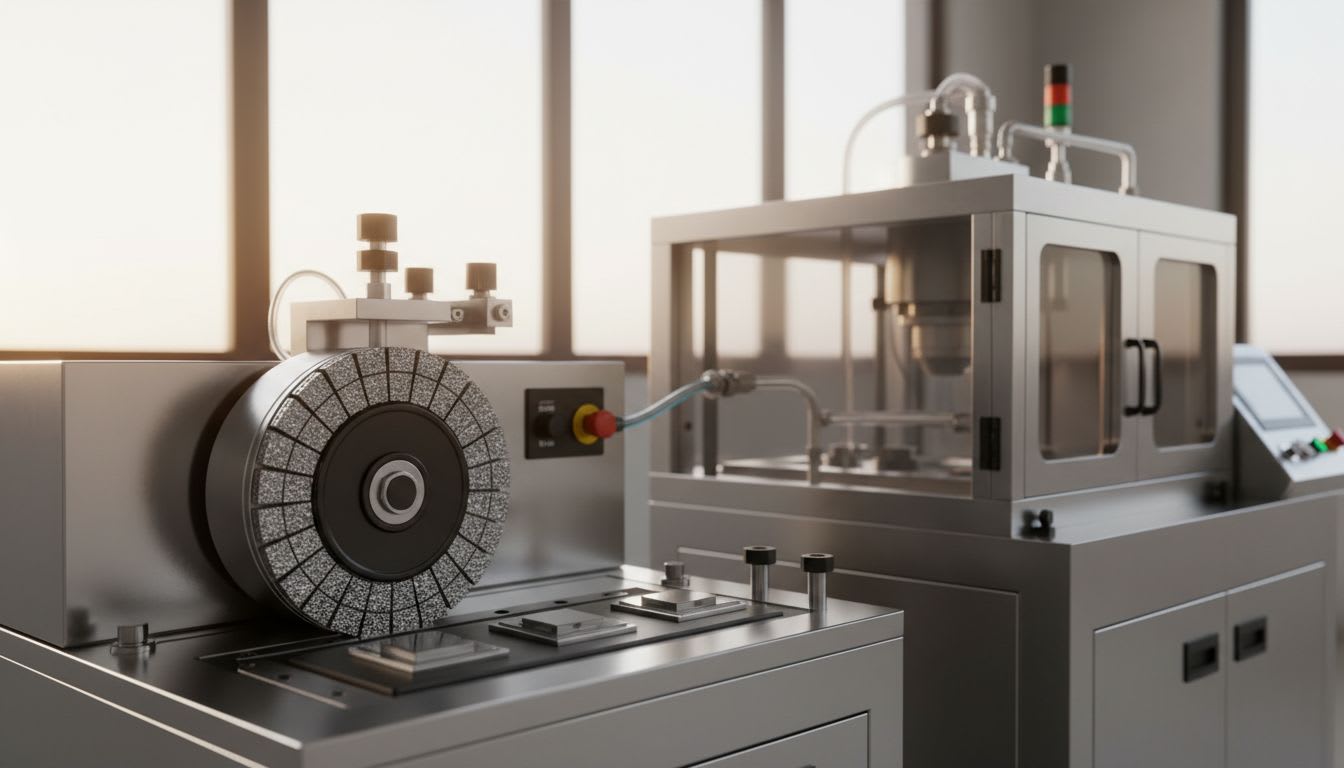
Huvics understands the complex considerations in semiconductor manufacturing better than anyone. Beyond simply supplying equipment, we focus on providing key metrics and customized equipment solutions to help our clients make optimal decisions at critical crossroads. Huvics' Grinder System and Cleaner Machine can be flexibly configured to meet the characteristics and goals of your production line, available in both Full Auto and Manual types. Equipped with precision grinding technology and advanced multi-step cleaning techniques like Micro Bubble, Water Jet, and Air Knife, Huvics' equipment enhances particle removal efficiency and minimizes defect rates, ensuring stabilized final product quality. Ultimately, establishing a 'unique criterion' best suited to your specific production goals and budget is crucial, and Huvics is committed to assisting in this initial judgment and providing customized evaluation criteria and solutions to maximize productivity and deliver optimal results.
Automation Semiconductor Equipment Lines: Key Evaluation Metrics and Huvics Solutions
The Importance of Evaluating Automation Lines
Today, equipment evaluation is a pivotal process that determines not only product quality but also production efficiency and corporate competitiveness in semiconductor manufacturing. As processes become more complex and require advanced technologies, manual methods alone cannot satisfy the rapidly changing market demands and precision criteria. Accurately evaluating the performance of advanced automated semiconductor equipment lines is crucial for a company's future competitiveness. Key metrics for evaluating automated lines include consistency, throughput, and fine precision in large-scale production environments. When it comes to Huvics equipment like the Full Auto Grinder System and Cleaner Machine with multi-step cleaning technology, what specific criteria should you assess to ensure optimal performance?
Performance of Huvics Automated Equipment
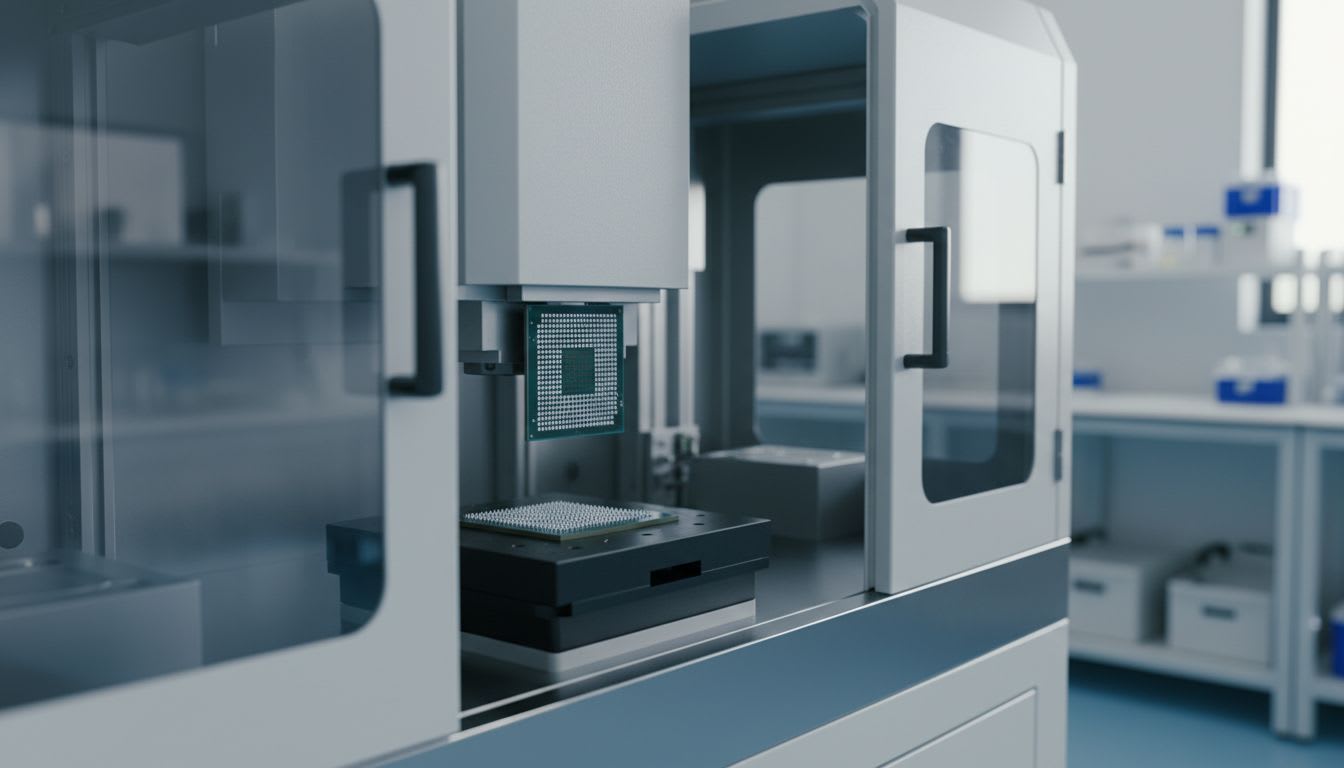
Beyond overall equipment efficiency (OEE), it is crucial to verify how consistently processing speed and micron-level uniform processing accuracy are maintained. As the PKG Grinder utilizes precision stages and diamond wheels to precisely process to desired thickness, recognizing the implementation of such advanced technologies in actual processes is vital. Additionally, ensuring definitive particle removal efficiency for final product quality stability is an essential evaluation criterion. Huvics' Cleaner Machine, incorporating Micro Bubble, Water Jet, Air Knife, and Oven Dry functions, maximizes particle removal efficiency, reducing defect rates to ensure final quality stability. Moreover, the ability to maintain ultra-precision grinding or perfect surface cleaning with minimal human intervention, coupled with ease of integration for flexible production line configurations, are crucial evaluation factors. Ultimately, evaluating automated equipment extends beyond mere machinery performance; it serves as a significant criterion for securing future competitiveness and achieving sustainable business growth.
Flexibility and Utility of Manual Semiconductor Equipment Lines
Flexibility and Applications of Manual Lines
While the efficiency of automated lines is prominently highlighted in semiconductor equipment evaluations, automation is not always the answer for all production environments and objectives. In certain situations, overlooking the distinctive advantages of manual lines would be a mistake. Key metrics to check while evaluating manual semiconductor equipment lines include flexibility, synergy with operator skill, and diverse work adaptability. For example, Huvics' manual PKG Grinder and Cleaner equipment offer simple reconfiguration for complex and diverse package types like FCBGA or WLCSP, which is crucial for establishing flexible production environments. In the research and development phase or small custom productions, the flexibility and quick process change capabilities of manual lines prove advantageous.
Operator Synergy and Huvics Manual Equipment
An ergonomic design that supports high-precision manual work not only reduces operator fatigue but also ensures consistent and reliable outcomes from skilled operators' delicate operations. This maximizes the value of precision stages and diamond wheel technology offered by Huvics' PKG Grinder, crucial in processes requiring micron-level precision machining. Additionally, the quick setup time for small-scale production and ease of rapid problem resolution in case of issues is an important advantage for enhancing production efficiency. In processes where full automation is challenging, or where human intuition is required, manual methods might be the cost-effective optimal choice for ensuring quality stability. Huvics' Cleaner Machine, equipped with Micro Bubble, Water Jet, Air Knife multi-step cleaning technology, can be precisely controlled manually to offer optimized flexibility for cleaning various products like camera modules and sensors. By leveraging both automation and manual strengths, Huvics assists in reducing defect rates and ensuring the stability of final product quality, catering to the diverse production environments and requirements of our clients.
Building the Optimal Line: Balancing Automation and Manual Systems
Comprehensive Analysis for the Optimal Choice
Choosing between automation and manual systems when building a semiconductor equipment line is a series of critical decisions that impact not just immediate efficiency but also production quality and future competitiveness. Ultimately, the most effective choice depends on a comprehensive analysis of factors such as anticipated production volume, required precision levels, budget constraints, and product diversity to be handled. Carefully scrutinizing all these variables with a balanced perspective is key to successful line construction.
Strengths of Automation Systems
Automation systems are ideal in the following scenarios:
- Optimized for large-scale production and standardized processes
- Advantageous for uncompromised consistent quality assurance
- Long-term operational cost savings despite initial investment
- Justifies value through predictable quality assurance
For instance, in processes requiring large-scale production, high-precision automation equipment such as Huvics' PKG Grinder plays a crucial role in minimizing defect rates while delivering consistent quality.
Strengths of Manual Systems
Conversely, manual systems offer the following strengths:
- Suitable for research and development and custom small-scale production
- Favorable for processes requiring human nuanced judgment
- Exceptional agility and flexibility to respond to process changes
- Possibility to establish with relatively lower initial costs
- Quick setup for diverse tasks is facilitated
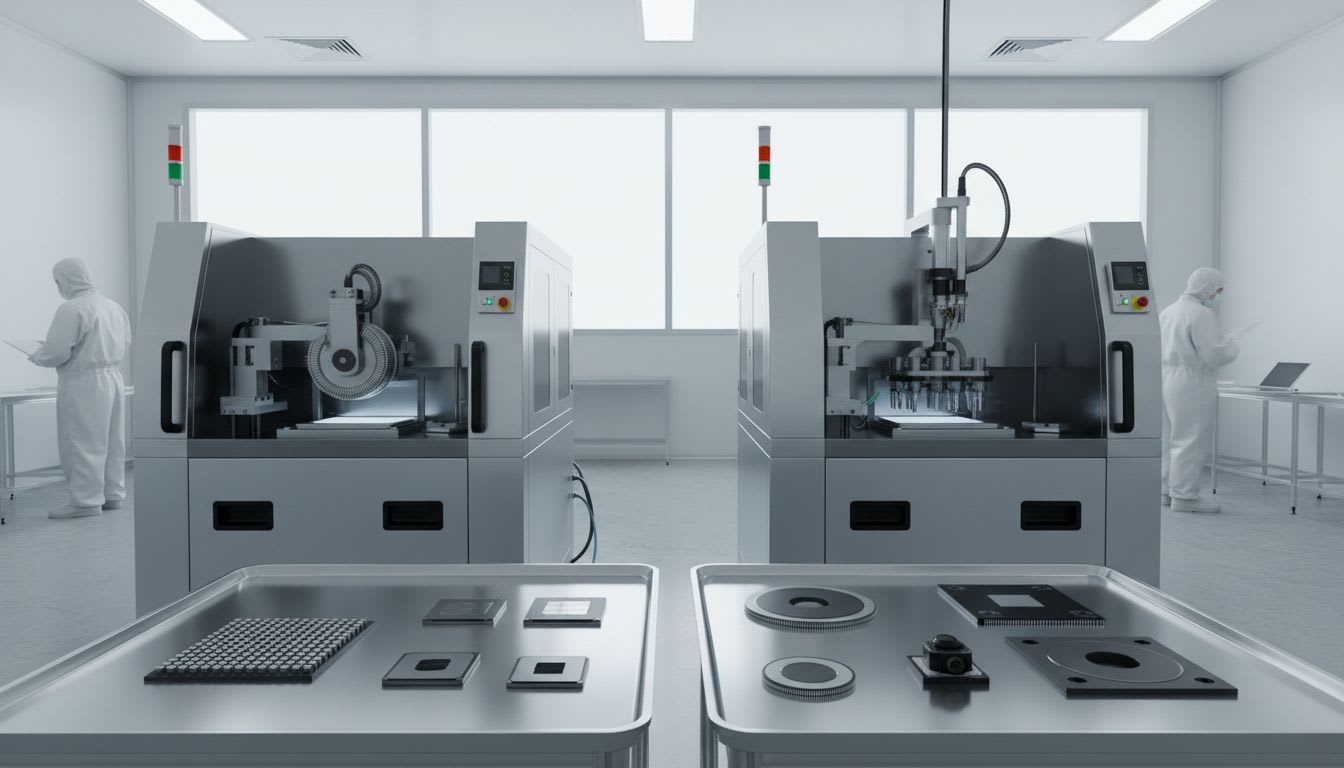
The availability of Huvics' Grinder System and Cleaner Machine in both Full Auto and Manual Types is specifically to meet the demand for flexible production line configurations. Particularly, the multi-step cleaning technologies such as Micro Bubble and Water Jet in the Cleaner Machine enable sheer particle removal and quality stability across various products even in manual processes.
Huvics Optimized Solutions
Huvics supports clients in achieving optimal outcomes with both automation and manual processing options, powered by precision grinding and multi-step cleaning technologies. When carefully considering current and future operation scales, specific precision requirements, and human resources, Huvics aims to propose the most effective line configurations, assisting clients in achieving the reduction of defect rates and ensuring final product quality stability. Beyond merely supplying equipment, Huvics seeks to explore the most suitable paths with clients, creating sustainable value in alignment with our core value and vision.
Huvics is a cutting-edge technology company developing and manufacturing automation equipment and production systems across the semiconductor, LED, mobile, and cosmetic industries.
With top talent and continuous technological innovations, we support the enhancement of customers' productivity and quality competitiveness.
Contact Huvics
Phone: 031-374-8285
Email: cdpark@huvics.com